Clearfield® quick guide
For a guide on how to get the most out of Clearfield®, please click below
A unique oilseed rape growing system
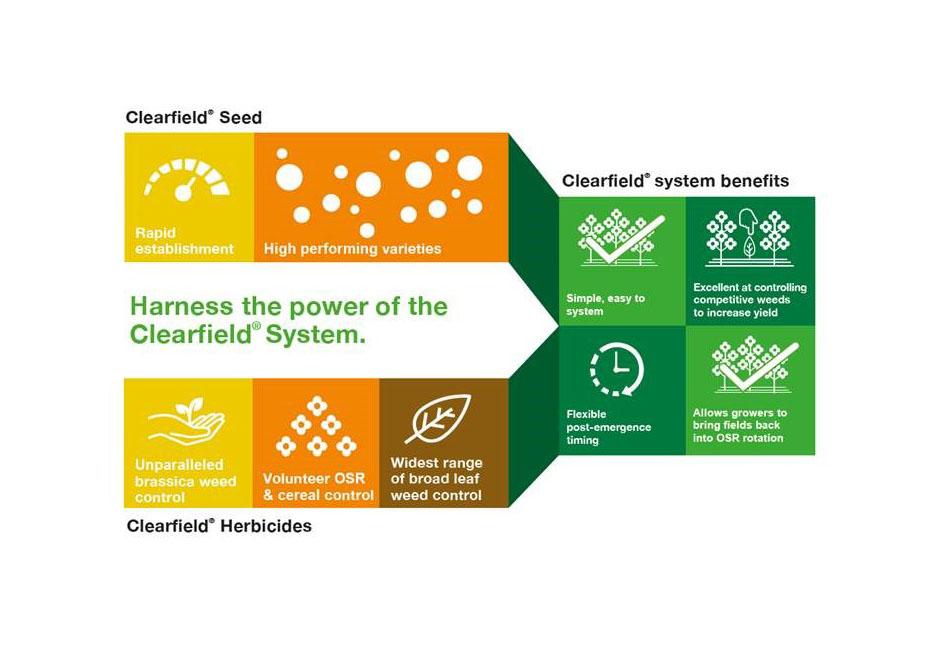
The Clearfield® system combines high performing, hybrid varieties with the powerful, post emergence herbicide, Cleranda®, offering Irish growers a simple, practical way to grow a reliable, high yielding oilseed rape crop.
Oilseed rape is an excellent break crop, offering benefits in the areas of grass weed control, soil health, crop diversification and spreading out workload. With the OSR area in Ireland potentially set to increase this year, the Clearfield® system offers a simple, compelling solution to Irish growers who want to maximise the success of their oilseed rape crop.
When Clearfield® was first introduced there was a slight yield lag compared to non-Clearfield varieties but this is not the case anymore. Positive harvest reports have been coming in from across the country and new generation varieties are now available in Ireland, where yield has moved on significantly, making this autumn a great time to try Clearfield®.
For a quick guide on using Clearfield, please click here.
See how this County Wicklow grower and advisor got on with Clearfield® this year.
This element above contains content from Youtube and transmits data to Youtube. You can block this in the Privacy Policy.
See how these three UK growers changed their perception of Clearfield®.
This element above contains content from Youtube and transmits data to Youtube. You can block this in the Privacy Policy.
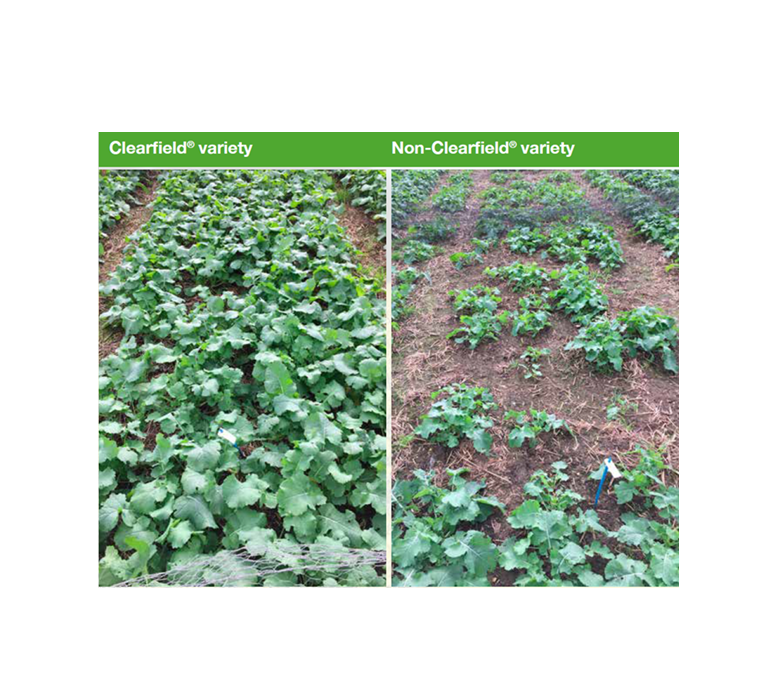
A SU herbicide was applied pre-drilling to Clearfield and non-Clearfield varieties in each replicate, in this trial, to demonstrate SU residue tolerance
Clearfield® varieties demonstrate a rapid autumn growth habit, helping the crop to grow away from pest challenges such as slugs and pigeons.
Sulphonylurea (SU) herbicide residues may exist in the soil especially after late use or dry spring / summer in a previous cereal crop. This can impede the establishment of the following oilseed rape crop, particularly where the soil has not been sufficiently cultivated.
All Clearfield® varieties are tolerant to SU herbicides. If residues are present, crop growth will not be affected. Non-Clearfield varieties will be significantly affected by SU herbicide residue.
Five varieties are available in Ireland for autumn 2020 with a wide range of agronomic profiles. Please speak to your agronomist or seed retailer for more information.
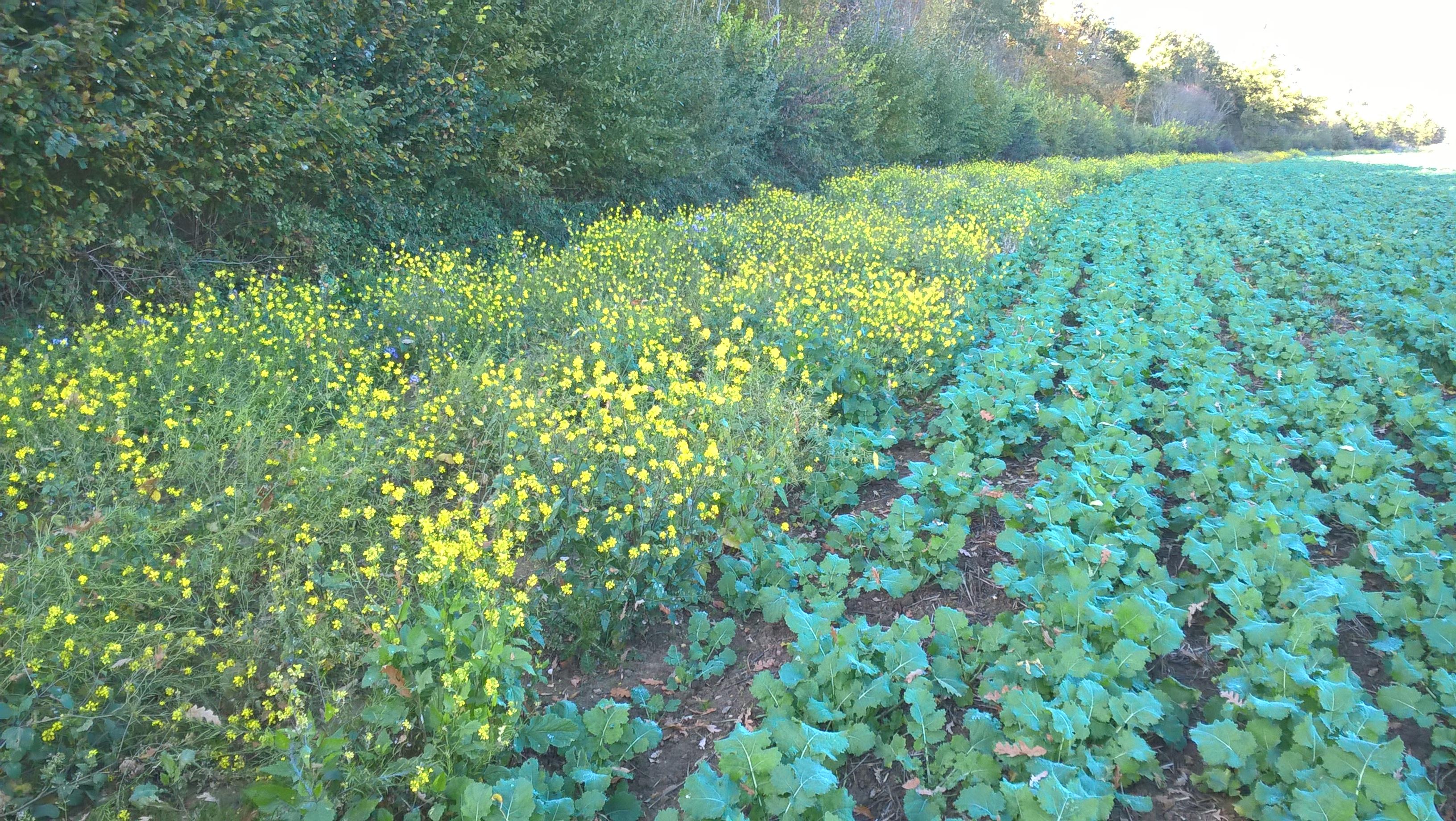
Severe charlock pressure in this field was well controlled by Cleranda as demonstrated by the untreated field margin. Clearfield variety drilled 20th August, Cleranda applied 22nd September, photo taken 23rd of October.
The Clearfield® system enables excellent control of problematic cruciferous weeds, such as charlock, runch and hedge mustard. This allows fields to be brought back into the OSR rotation where previously these weeds were too difficult to control.
Please note that Cleranda® should always be applied with 1.0l/ha of Dash® HC and to a dry leaf. Cleranda® works best when applied to small, actively growing weeds, with good spray cover. Typically, this will be in September and October.
Control of OSR volunteers helps achieve an optimum plant canopy, which is essential for maximising yields.
Cleranda® also controls volunteer cereals, wild-oats, bromes and ryegrass present at spraying.
Note: If a high population of volunteer cereals establishes early, a graminicide application of Stratos® Ultra (cycloxydim) should be considered. This will allow for a well-timed and uncompromised Cleranda® application.
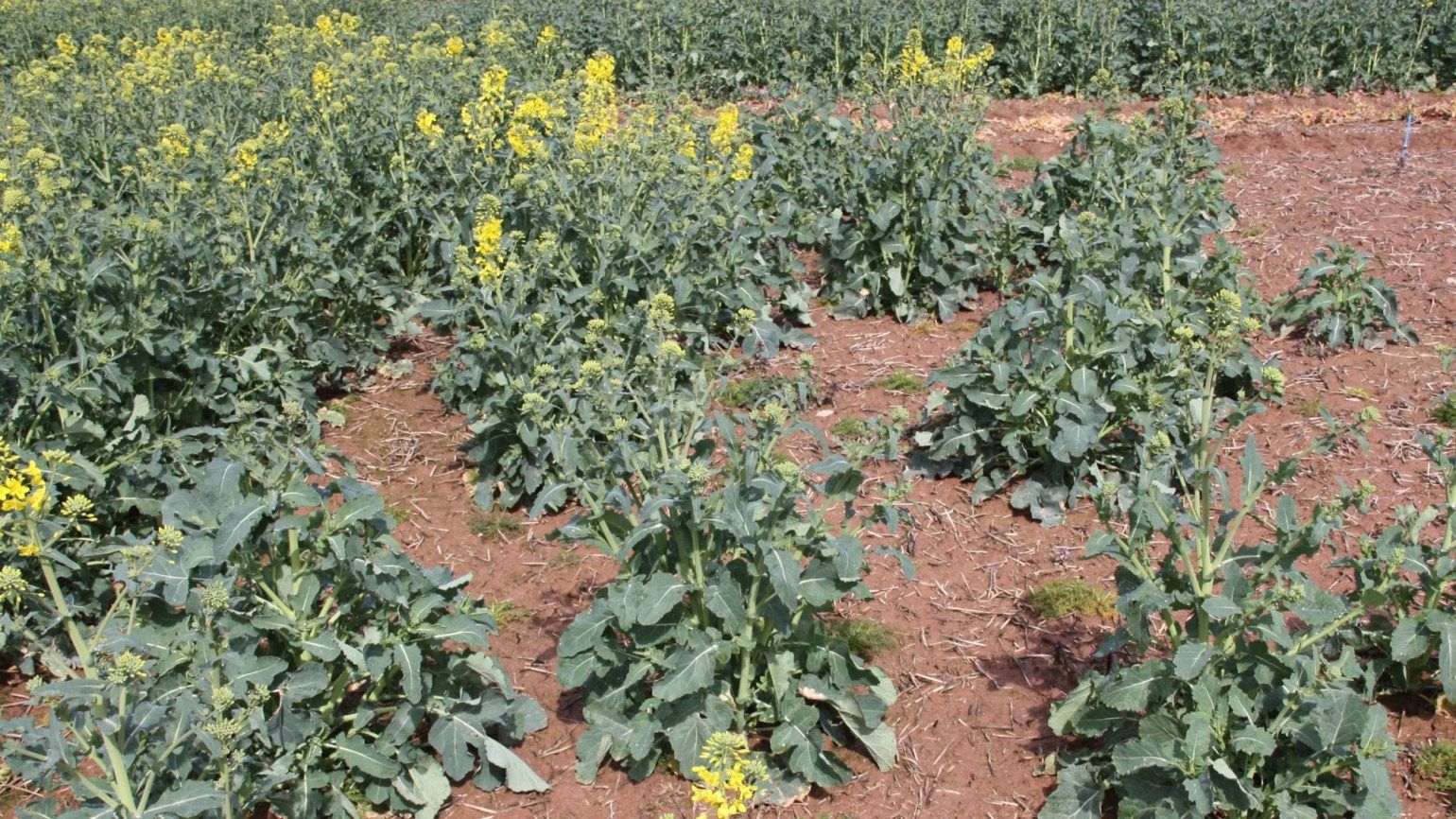
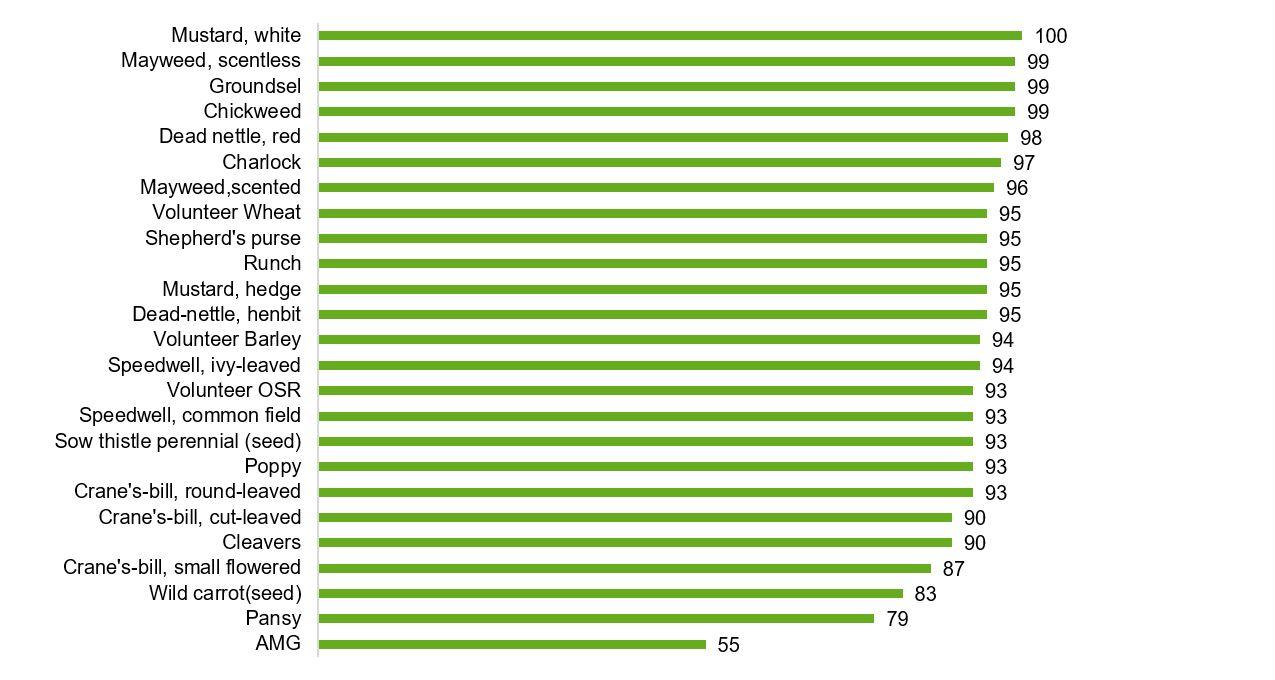
Source: BASF Biological Dossier | Weeds 1-4 TL
The post-emergence residual and contact activity of Cleranda® provides the broadest range of control of any herbicide available for use in oilseed rape.
Cleranda® should be applied when weeds are actively growing and at the 2 – 4 leaf stage of the weeds. As the control of brassica type weeds relies on contact activity it is important to time the application when most of these have emerged. Don’t delay too late into October or November when growing conditions are poorer and yield has already been lost. Timely control also encourages a competitive crop, which will help suppress any later weed flushes in fields with a high weed bank.