To understand how to manage a barley crop, download the Barley Agronomy Guide written in collaboration with ADAS, Teagasc, SRUC, and NIAB

In barley, productivity and quality are king for both grain and straw. If you can deliver it, the rewards are high; but getting there can be demanding. It takes technical know-how and expert crop management.
There are three important yield-robbing diseases to be aware of in barley; Net blotch, ramularia and rhyncosporium. The information on this page should give you a better understanding of the imapct of these diseases and how you can protect agaisnt them.
This element above contains content from Youtube and transmits data to Youtube. You can block this in the Privacy Policy.
Join David Leahy as he revisits a Winter Barley crop throughout the 2024 growing season, assessing how to build the most effective disease control programme.

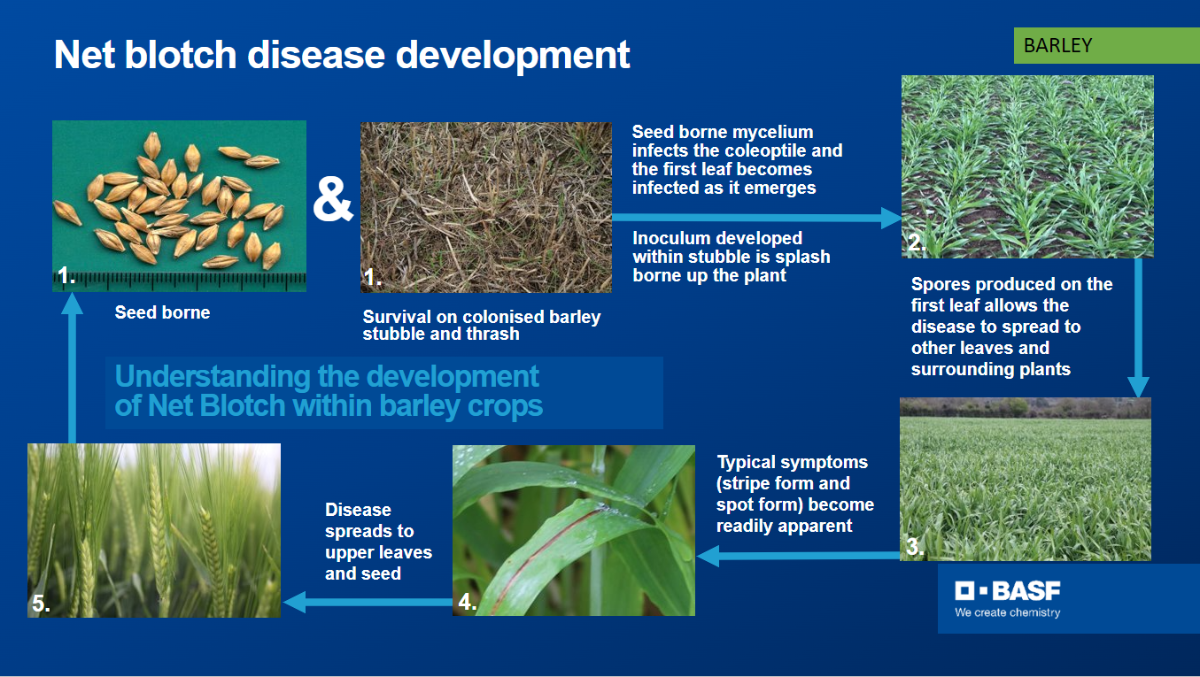
Net blotch is a significant, yield robbing disease which can establish itself very early in the plants development i.e. from leaf emergence through to early tillering. For this reason, it needs careful consideration at the T1 timing.
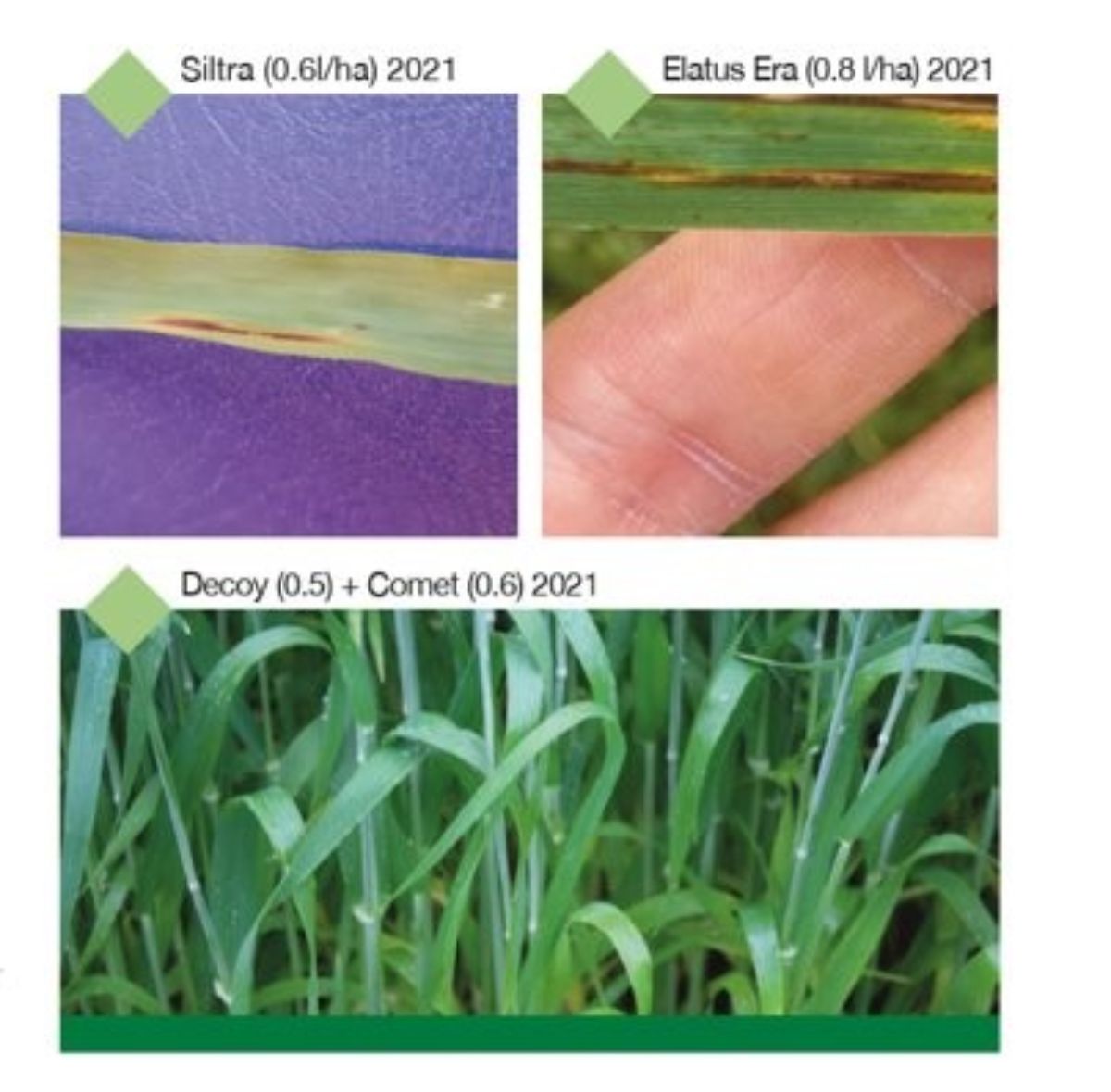
In recent years, the performance of key fungicide active ingredients have shown
reduced levels of control. This relates to the emergence of a resistant strain of net blotch,
called the F129L mutation. The increased presence of F129L adversely impacts the field
performance of prothioconozole, strobilurin and SDHI based products. Fortunately, F500 (pyraclostrobin) continues to demonstrate high levels of effectiveness against the disease.
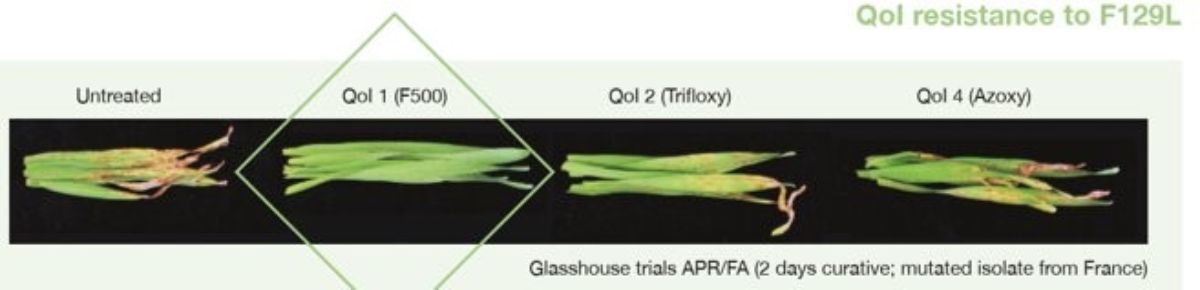
High net blotch resistance levels for Qol (F129L) continued to dominate within Ireland in 2022.
• F129L levels above 20% tend to show a reduction in net blotch control from strobilurins other than F500®
• A wide range of SDHI resistance is also readily apparent. However, F129L needs to remain the primary focus
• With exception of 1 sample, F129L was detected in different frequencies in all analsyed samples from IE. N total = 16
• F500® remains the strongest solution in the control of F129L
Successive barley crops grown within minimum tillage systems are particularly susceptible to net blotch due to surface trash creating a bridge for the disease.
Using a mixture of chemistry in the fungicide programme, including an effective azole, strobulurin and SDHI will help to protect against infection.
Ramularia is a stress induced disease where the symptoms are manifested later in the season during periods of wet and bright weather. Stress management over the crop’s life cycle remains central to managing the disease.
Ramularia can be carried over in infected seed, so ensure the seed is disease free before drilling. Do not save seed from a crop which has had a significant ramularia infestation.
SDHOI chemistry can also be used to help control ramularia outbreaks.