Barley
In barley, productivity and quality are king for both grain and straw. If you can deliver it, the rewards are high; but getting there can be demanding. It takes technical know-how and expert crop management.
There are three important yield-robbing diseases to be aware of in barley; Net blotch, ramularia and rhyncosporium. The information on this page should give you a better understanding of the impact of these diseases and how you can protect against them.
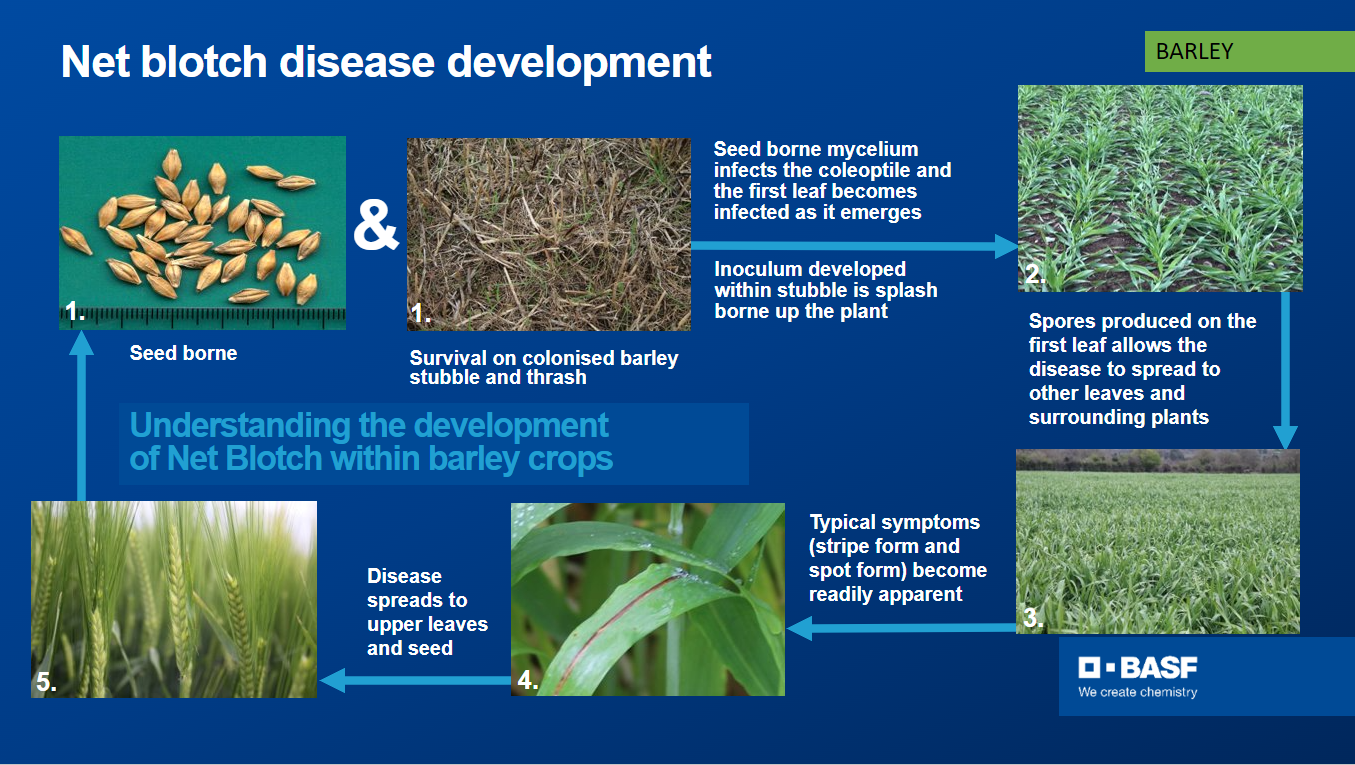
Net Blotch
Net blotch is a significant, yield robbing disease which can establish itself very early in the plants development i.e. from leaf emergence through to early tillering. For this reason, it needs careful consideration at the T1 timing.
Risk Factors
Certain varieties are more susceptible than others. Check the variety to understand the risk and where possible, choose a variety with a high disease rating.
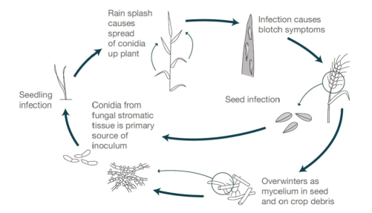
Net blotch can develop early within barley crops through infected seed and trash. Later drilling will slow the development of the disease.
Successive barley crops grown within minimum tillage systems are particularly susceptible to net blotch due to surface trash creating a bridge for the disease.
Net blotch infection develops during periods of high humidity and temperatures in the range of 10°C - 25 °C. In these ideal conditions, net blotch can cycle every 14 days. Once inoculated, wind and rain-splash can help to spread the infection.
The Most Effective option for net blotch control
In recent years, the performance of key fungicide active ingredients have shown
reduced levels of control. This relates to the emergence of a resistant strain of net blotch,
called the F129L mutation. The increased presence of F129L adversely impacts the field
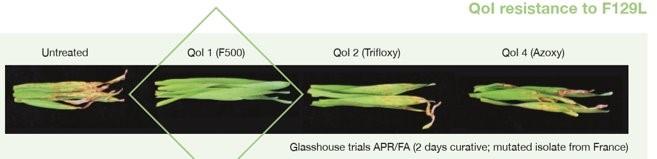
performance of prothioconozole, strobilurin and SDHI based products. Fortunately, F500 (pyraclostrobin) continues to demonstrate high levels of effectiveness against the disease.
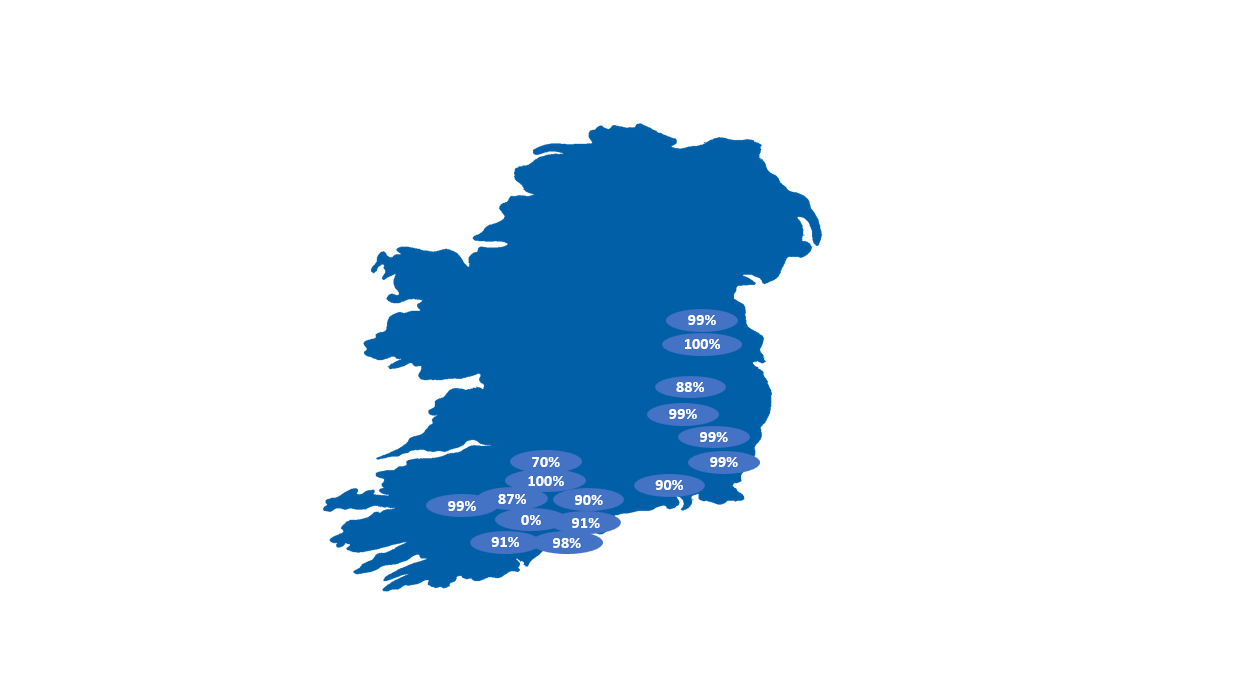
Map shows the % of F129L present in the sample population tested
F129L Irish sample analysis
High net blotch resistance levels for Qol (F129L) continued to dominate within Ireland in 2022.
• F129L levels above 20% tend to show a reduction in net blotch control from strobilurins other than F500®
• A wide range of SDHI resistance is also readily apparent. However, F129L needs to remain the primary focus
• With exception of 1 sample, F129L was detected in different frequencies in all analsyed samples from IE. N total = 16
• F500® remains the strongest solution in the control of F129L
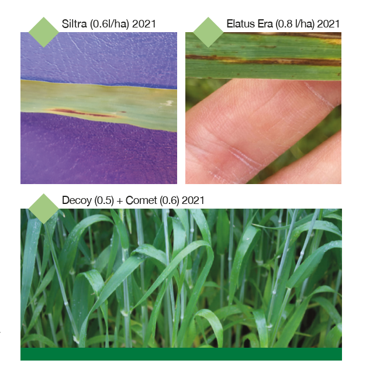
AHDB (Control of rhynchosporium (leaf scald) in barley
Rhyncosporium
Rhyncosporium is still the most debilitating wet weather disease in Ireland. It is vital that it is controlled early in crops to maximise tiller retention which is key to achieving high barley yields
Risk Factors
As with net blotch, rhyncosporium can develop early within barley crops through infected seed and trash. Later drilling will slow the development of the disease
As the disease is spread by rain splash, periods of wet weather increase the risk of rhyncosporium infections.
Successive barley crops grown within minimum tillage systems are particularly susceptible to net blotch due to surface trash creating a bridge for the disease.
How to manage rhyncosporium
Where possible, choose varieties with a higher resistance rating to reduce the risk of infection.
Extending the rotation between barley crops will reduce the likelihood of disease being carried over through crop trash or stubble.
Avoid using farm saved seed from fields with high rhyncosporium infections as this can carry over into the next crop.
Nitrogen should be managed carefully; a thick lush canopy creates the ideal microclimate for rhyncosporium.
Crops which are in the ground for longer have a prolonged risk of infection. Early-sown spring crops (December-February) and very early-sown winter crops will be at more risk.
Using a mixture of chemistry in the fungicide programme, including an effective azole, strobulurin and SDHI will help to protect against infection.
Ramularia
Ramularia is a stress induced disease where the symptoms are manifested later in the season during periods of wet and bright weather. Stress management over the crop’s life cycle remains central to managing the disease.
Ramularia Management
Ramularia can be carried over in infected seed, so ensure the seed is disease free before drilling. Do not save seed from a crop which has had a significant ramularia infestation.
SDHI chemistry can also be used at to help control ramularia outbreaks.